Dear Diary—
The Pull Toward Certainty
It’s one thing to practice “yes, and” in a relationship (see part 1; previous entry).
It’s another thing entirely to practice it in a culture that feels like it’s constantly asking us to pick a side.
What I find is that most people prefer black and white to grey.
We want things to feel certain. Predictable. Clear.
There isn’t much tolerance for something being different than we originally thought.
And honestly… that makes sense.
Uncertainty creates anxiety.
If we can’t be sure of something, then maybe there’s danger.
You can see this play out culturally in places like the stock market—
where no concrete event has even happened yet, and still everything swings wildly at the possibility of change.
More personally, we do the same thing in quieter ways.
We try to control outcomes.
We double down on what we believe to be true.
We avoid situations that might challenge what we think we know.
Because it’s uncomfortable,
and discomfort is hard.
I remember hearing once—no idea how scientifically sound it is, but it stuck with me—that most adults stop putting themselves in situations where they feel incompetent.
In other words, we stop practicing being uncomfortable.
Think about a kindergartner learning to tie their shoes.
The frustration. The trial and error. The not getting it right over and over again.
We don’t live there anymore and we don’t even try to.
Try writing a paragraph with your non-dominant hand.
Most of us won’t make it past a few sentences before switching back.
We don’t like discomfort.
And uncertainty is discomfort.
So, we create certainty where we can.
Even if it’s rigid.
Even if it’s incomplete.
When Opposites Become Enemies
Layered on top of that, is something our culture reinforces constantly:
If one thing is true, its opposite must be false.
If I value accountability, I must not value compassion.
If I believe in rest, I must reject ambition.
If I care about community, I must dismiss individuality.
You can scroll social media for five minutes and find a hundred confident voices on any topic of interest—each one backed by data, each one convinced they’re right.
And what’s interesting is… many of them are right.
At least in part.
There’s actually some really interesting research on this.
Jonathan Haidt, a moral psychologist, studied how people think about morality—especially across political lines.
What he found was that there’s often a clear distinction in what each side believes is most important when it comes to creating a functioning society.
Some people tend to prioritize care and fairness—protecting others and creating equity.
Others place more weight on things like loyalty, authority, and tradition—protecting stability, order, and belonging.
And others emphasize freedom—guarding individual choice and resisting control.
None of these are inherently wrong.
In fact, a healthy society actually needs all of them.
Care without structure can become chaos.
Structure without care can become rigid and cold.
Freedom without responsibility can become disconnection.
Responsibility without freedom can become oppressive.
But instead of seeing these as complementary…
we’ve learned to see them as competing.
The Work of “Yes, And”
But what if the work is not choosing one over the other?
What if the work is learning to hold both?
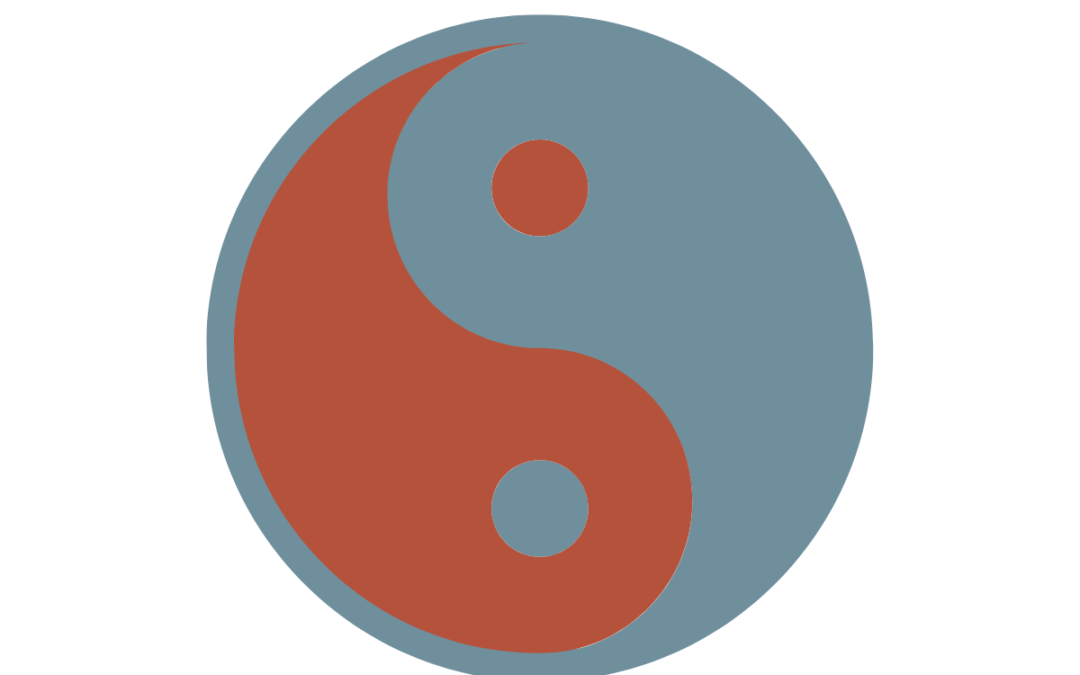
Yes, and.
The Therapist Lens
In my office, I see this every week.
Couples convinced they are opposites.
Parents and their adult children convinced the other is being unreasonable.
Men feeling like they have to choose between strength and vulnerability.
Underneath it all is the same question:
“If I allow your truth to exist… does that erase mine?”
And the answer is almost always no.
But culturally, we are not modeling that very well right now.
The Cultural Tension
We are saturated in binary thinking.
Right or wrong.
Strong or soft.
Success or failure.
Tradition or change.
Us or them.
At best, it feels more comfortable to pick a side.
At its deepest level, it feels safer.
Because the grey area requires humility.
And humility feels vulnerable.
Integration
“Yes, and” does not mean agreement.
It means curiosity.
It means I can say:
Yes, I see your perspective—
and I still hold mine.
Yes, this system has flaws—
and there is good within it.
Yes, I value X—
and I refuse to sacrifice Y.
Maturity—emotionally and culturally—requires nervous systems that can tolerate complexity.
And that is no small task.
The Gift of Holding Both
But the gift of it…
The gift is not just saying,
“I see your perspective, and I still hold mine.”
It’s deeper than that.
It’s being changed by what you see.
It’s recognizing that another perspective might hold value—
and allowing that value to shape you, even slightly.
Not abandoning who you are.
But softening the edges.
Because what we often call “balance” isn’t about becoming neutral.
It’s about knowing where you naturally lean—
and being willing, at times, to step just a little toward the middle.
Individually, we will always have our tendencies.
Our experiences. Our instincts. Our preferences.
But collectively…
We become something stronger when we can stretch toward each other.
When we can tolerate the discomfort of not being fully right.
When we can borrow from perspectives we wouldn’t normally choose.
When we can find value in places we’ve never thought to look.
Not changing who we are—
but expanding what we’re capable of holding.
And maybe that’s where connection lives.
Not in sameness.
Not in agreement.
But in the quiet, difficult, deeply human work of saying—
Yes…
and.
Sincerely,
A therapist — still figuring it out.
Reflection Questions:
Where in our culture do you feel pressure to pick a side?
What belief feels threatened when someone disagrees with you?
What would it look like to hold your conviction — and someone else’s humanity — at the same time?